Mary and John BreillatPhilanthropist1864 to 1942
January 20, 2026
Anthony Norris GrovesPhilanthropist1864 to 1942
January 20, 2026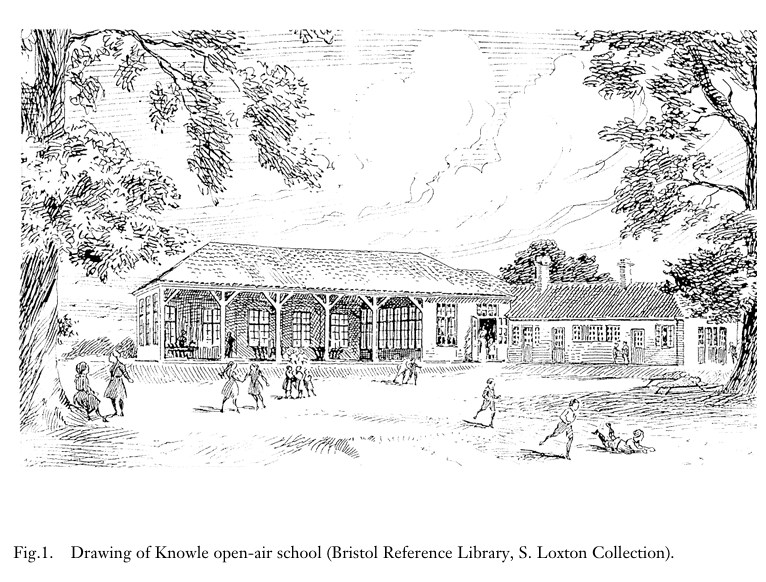
Fanny Townsend was a tireless supporter of good causes in the areas of education and health during the late nineteenth century and early decades of the twentieth century. She was described by some of her contemporaries as ‘the modern Mary Carpenter’.
Early Life and Organisational Activity
Known throughout most of her life by her initials, Miss F.M. Townsend, Fanny was born in 1864 and grew up in Westbury-on-Trym. Her father built up a prosperous business and when he died in 1888 she and her mother moved to a house in Sneyd Park. Neither of them needed to work because of the money they inherited. Fanny dedicated herself to a life of involvement in many different charities and voluntary organisations, starting some of them herself and chairing others.
These organisations included the Blind, Deaf and Special Schools’ Committee; the Bristol Working Girls Club; the Industrial and Special Schools Committee; the Bristol Mental Deficiency Act Committee and the Bristol Infant Welfare Association. There are two others in which she played an especially significant role.
The School for Mothers
In 1910 Fanny created and became chair of the School for Mothers. This offered lessons to mothers on subjects such as childcare and nutrition, and in due course employed a resident woman doctor in Dr Annie Cornall (also remembered in the cemetery). The School combatted infant mortality and supported mothers from less privileged backgrounds in bringing up their babies in clean and nourishing environments. By 1915 it had extended across ten locations in Bristol and had helped 1400 mothers. In 1930 Fanny extended the School to include the Central Maternity Clinic, offering mothers excellent medical support prior to the advent of the NHS.

Knowle Open Air school image from BRL Loxon Collection
The Knowle Open Air School
In the Edwardian era many children from poor backgrounds were excluded from school because they were chronically weak and suffered from infectious diseases like tuberculosis. In 1913 Fanny proposed to the Bristol Civic League a new idea: the creation of open-air schools designed to cater for the needs of weaker children where there would be less risk of cross-infection and. Sheds which were open on one side would serve as classrooms. There were closed rooms which were used for meals and in bad weather, but in good weather children would work, rest and play in the open air, blankets and folding chairs being provided. A start on this project was made with the opening of the first Bristol Open Air School in Knowle in October 1913. Fanny became its Honorary Secretary. A second school was opened in Barton Hill, the two schools being taken over by the city education department in 1920. Open air classes also took place under bandstands in Victoria and Eastville Parks during the inter-war years. The schools were effective in that children whowould have been otherwise unschooled received a rudimentary education and the health of many of them improved.
Later Years, Death and Burial
Fanny herself suffered intermittently from poor health and eventually, in 1933, retired from her voluntary activities and moved to Clevedon for her final years, dying there in 1942. The Western Daily Press reported that she had been ‘well known and loved throughout Bristol’, especially ‘for her services to children’. ‘Gifted with a precious personality, she never sought the limelight but went about her good work in a quiet, unassuming manner’.
Fanny’s funeral was held at All Saints Church in Clifton and she was interred in the family vault at Arnos Vale Cemetery.