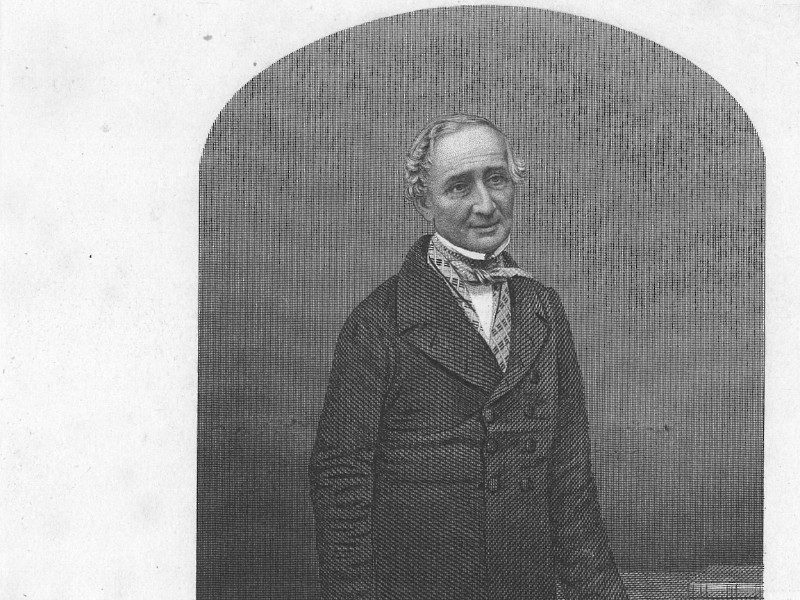
Captain George Taberer John Breillat (1769-1856) Gas Light Engineer & Mary Breillat - First Burial at Arnos Vale Cemetery1771 to 1839
April 1, 2025
Fanny TownsendJohn Breillat (1769-1856) Gas Light Engineer & Mary Breillat - First Burial at Arnos Vale Cemetery1771 to 1839
January 20, 2026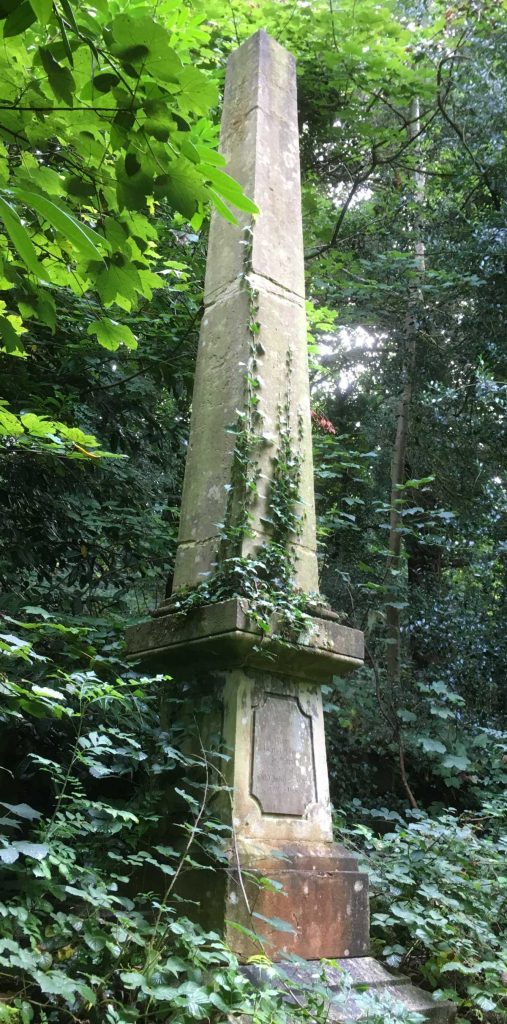
John Breillat (1769-1856) Gas Light Engineer
Mary Breillat (1771-1839) First Burial at Arnos Vale Cemetery
John Breillat was the man who brought gas light to the streets of Bristol, while his wife Mary has the distinction of being the first person to be buried at Arnos Vale Cemetery.
Early Life
John Breillat was born in Spitalfields, London on 24 September 1769. His French-sounding name is explained by the fact that he was a descendant of Huguenots (French Protestants) who had to leave France in 1685. John moved to Bristol in 1793, and married Mary Holbrook on 2 July 1795 at St Nicholas Church. They went on to have six children, Ebenezer, Mary Joseph, William Myles, Mary and Theophilus between 1796 and 1809.
The Bristol Gas Light Company

Advert in the Bristol Mirror 1811, for the demonstration of gas light
John was a silk dyer by profession and that was his occupation for over 20 years. However, he developed an interest and expertise in gas lighting. Up to the 1810s Bristol, like other cities, had relied on oil lamps for public lighting, but lay in total darkness from midnight until dawn. John was convinced that gas lighting could be both more economic and more effective. On the evening of 2 September, 1811, he performed a public experiment lighting up the parlour of his house, 56 Broadmead with gas. A group of influential enthusiasts gathered around him and in 1815 set up the Bristol Gas Light Company, with John as Chief Engineer. The company was incorporated by Act of Parliament in 1819.
The first gas factory was built at Temple Back, with four new gas retorts (ovens in which coal was baked to release gas). In 1817 the first gas lamps were lit in the central streets of the city around Union Street and Bridge Street. Not surprisingly, there were teething problems, the new technique took some time to be accepted, and there were years of financial pressure in which worker’s wages – including John’s – had to be reduced. But demand for gas lighting gradually increased and the late 1820s and the early 1830s proved a prosperous time for the company, though some gas lamps were damaged in the Bristol Riots of 1831. One public gas lamp was as effective as four which used oil. Gas light was gradually extended to outer areas of Bristol like
Westbury and Bedminster. John acted as consultant for several towns in the south west that followed Bristol in developing gas lighting, notably Taunton, Newport, Wells, Neath and Bath.
John’s sons followed him into the business. The eldest son, Ebenezer, was reprimanded on a couple of occasions for neglect of duties in his early years, but he proved his worth so that eventually, when John retired in 1847, he succeeded him as Chief Engineer. Joseph and William Myles also worked for the company.

Mary and John Breillat's monument. Picture by David Gurney
Later Life, Mary’s Death and Second Marriage
The gas works moved from Temple Back to Avon Street around 1819; John and Mary Breillat lived next to the works throughout the 1820s and 1830s. Remarkably, John himself had the prime responsibility for turning the gas supply on and off daily.
Mary died on 23 July 1839. By now John was a well-established and respected member of the Bristol business community, so he was well positioned to secure a prime elevated spot for his wife’s burial in the recently opened Arnos Vale Cemetery. The couple had a housekeeper, Sophia James, and three years later John married her. Sophia was 36 years his junior.
By 1844 John’s health and energy were fading: the company allowed him time off between 11 am and 3 pm for ‘relaxation’. But he lived a further nine years after his retirement in 1847, dying aged 86 in April 1856. He was buried with his first wife Mary in Arnos Vale, and his second wife Sophia joined him in the same burial plot when she died in 1877 – a true ‘husband sandwich’!
The memorial is now a listed monument.
Accolades
Upon John’s death Bristol newspapers praised him for the scientific knowledge coupled with sound practical sense which he displayed as engineer to the Gas Light Company. His ‘constant and unaffected urbanity of mind and manners endeared him to all who came in contact with him’. The company directors acknowledged the debt which was owed to him ‘not only as regards the moral excellence and strict integrity of his character, but also ‘their high appreciation of the sound practical intelligence, the persevering industry, and the warm desire to promote the best interest of the company, which he increasingly exhibited for the long period of nearly 40 years’.
Gathering voices wrote a poem about the importance of gas light in Bristol.