Fanny TownsendOne of the founders of the Plymouth Brethren and a dentist who became a missionary in India.1795 to 1853
January 20, 2026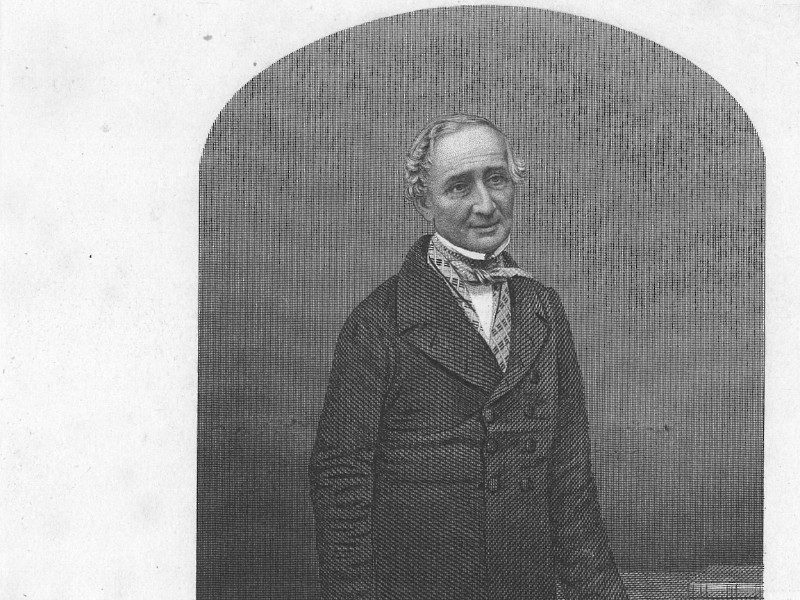
Anthony-Norris-Groves
Anthony Norris Groves was the brother-in-law of George Müller. He was one of the founders of the Plymouth Brethren and a dentist who became a missionary in India.
Early Life
Groves was born in 1795 in Newton, Hampshire, the son of affluent Anglican parents. As a teenager he studied dentistry in London and at the age of 19 was able to set up a dental practice in Plymouth. He married his cousin, Mary Bethia Thompson, in 1816. Moving to Exeter in 1818, his practice was very successful and he earnt an income of nearly £1500 a year. While living in the south-west, he had a profound Christian conversion and became associated with John Nelson Darby, George Müller and the early founders of the Plymouth Brethren. Muller married Norris’s sister Mary, and was deeply impressed both by a booklet Groves wrote called Christian Devotedness and by Groves’ decision to go with his wife and two young children to Baghdad as a missionary in 1829.
Missionary Work in Baghdad and India
Groves embarked on this trip without any support from a missionary society, using wealth he had accumulated from his practice and helping the poor in Baghdad with his medical knowledge. In 1831 the city was hit by a devastating plague, and both Mary Groves and their baby daughter died. In April 1833 Groves with his two sons left Baghdad for Bombay. After spending a year in England during which he married again, his second wife being Harriet Baynes of Malvern, he returned to India in 1836. He spent time in Madras, where he practised his profession as a dentist, and in Chittoor where he established a farm. His missionary work had some success, and – seeking to make churches in India less dependent on Western input – he stimulated the creation of some indigenous Christian fellowships. Although he was involved in several controversies about church order and governance, Groves had a reputation for courtesy and generosity.
Death and Burial
With his health failing, Groves returned to England in 1852, landing at Southampton and spending the final months of his life in Bristol with his brother-in-law George at Muller’s home, 21 Paul Street. George’s daughter Lydia wrote that ‘leaning his head on his hand, he sweetly fell asleep in Jesus’ on Friday 20 May 1853. Müller purchased Groves’ grave in Arnos Vale Cemetery, and Muller’s colleague Henry Craik conducted the burial. His wife Harriet and servant Hanna (also known as Hamie), who devotedly accompanied the couple back from India, were later buried with him. Henry and Edward, the two sons from Groves’ first marriage, stayed in India and established a sugar factory near Mysore.