
Ash dieback at Arnos Vale Cemetery
Ash dieback is one of the biggest challenges facing woodland in the UK today. At Arnos Vale Cemetery in south Bristol it is affecting almost every ash tree on site. Managing this disease safely is complex, costly, and a long-term project.
We are sharing our experience to help others facing similar challenges.
What is ash dieback?
Ash dieback is a serious tree disease. It is caused by an airborne fungus called Hymenoscyphus fraxineus.
The disease weakens and eventually kills ash trees of all ages. Once a tree is infected, it cannot be cured.
Signs of ash dieback include:
- Leaves that wilt, blacken, or fall early
- Dark lesions on stems and branches
- Dead or dying branches in the crown
- Diamond-shaped marks where branches meet the trunk
As the disease progresses, trees become brittle and unsafe. Dead branches can fall without warning. This creates a serious safety risk for visitors, staff, graves and wildlife.
There is currently no way to stop ash dieback spreading.
Management focuses on safety and long-term woodland health, rather than prevention.
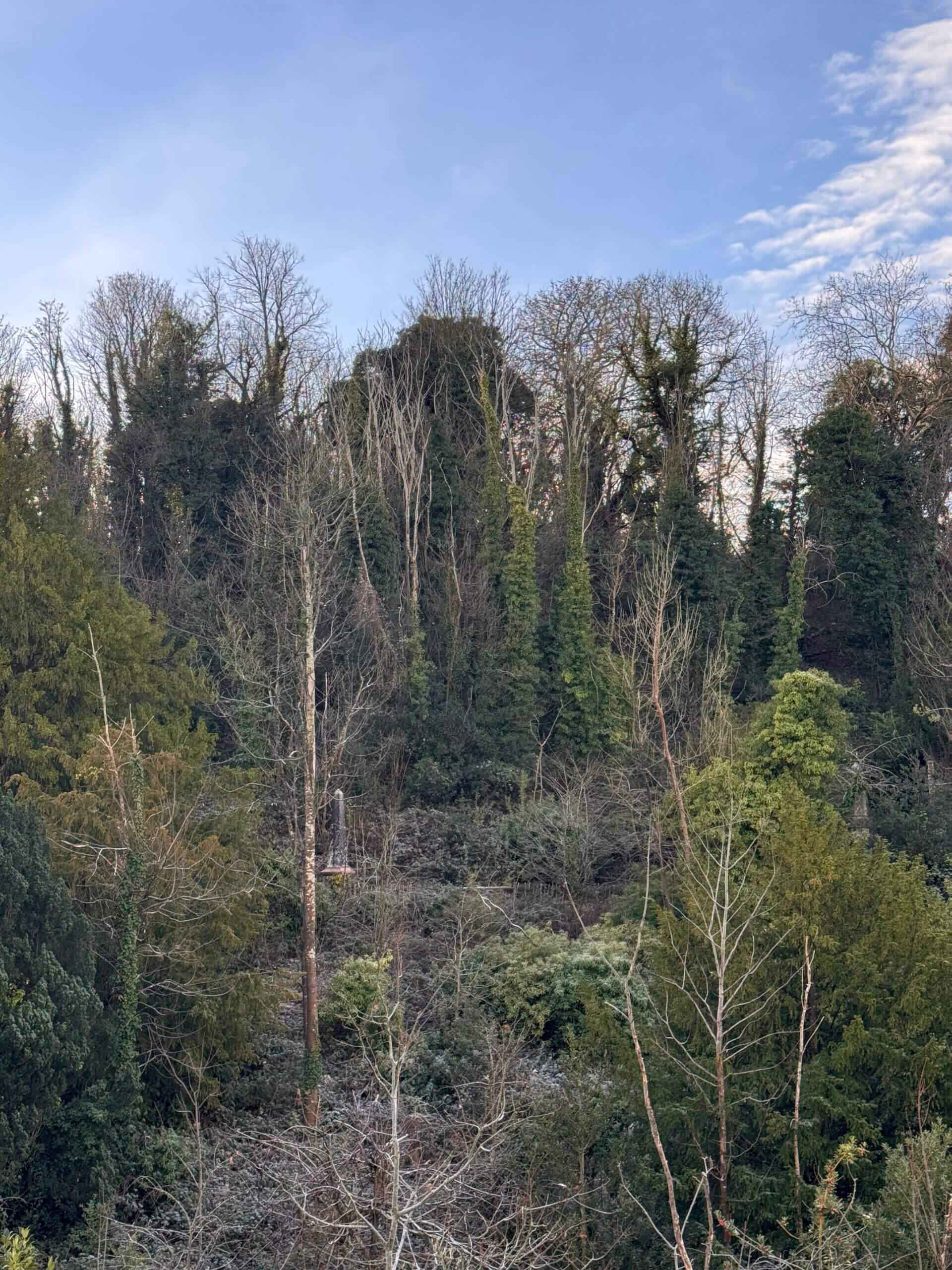
Woodland slope at Arnos Vale
How is ash dieback affecting Arnos Vale?
Ash dieback was first identified at Arnos Vale in 2017 and sadly most of the trees across our 45 acre site are affected.
The woodland at Arnos Vale, largely formed of self-seeded ash and sycamore, is a result of neglect beginning in the mid-20th century. Where once the site was an open landscape, planted with a handful of carefully selected specimen trees, as active management of the site declined in the 1960s and 70s, self-seeded trees were quick to establish and very quickly created areas of dense secondary woodland.
Every year, we are undertaking a programme of tree inspections by qualified arboriculturists, who monitor affected trees and identify those that have advanced stages of the diseased that they pose a risk to the safety of visitors and monuments.
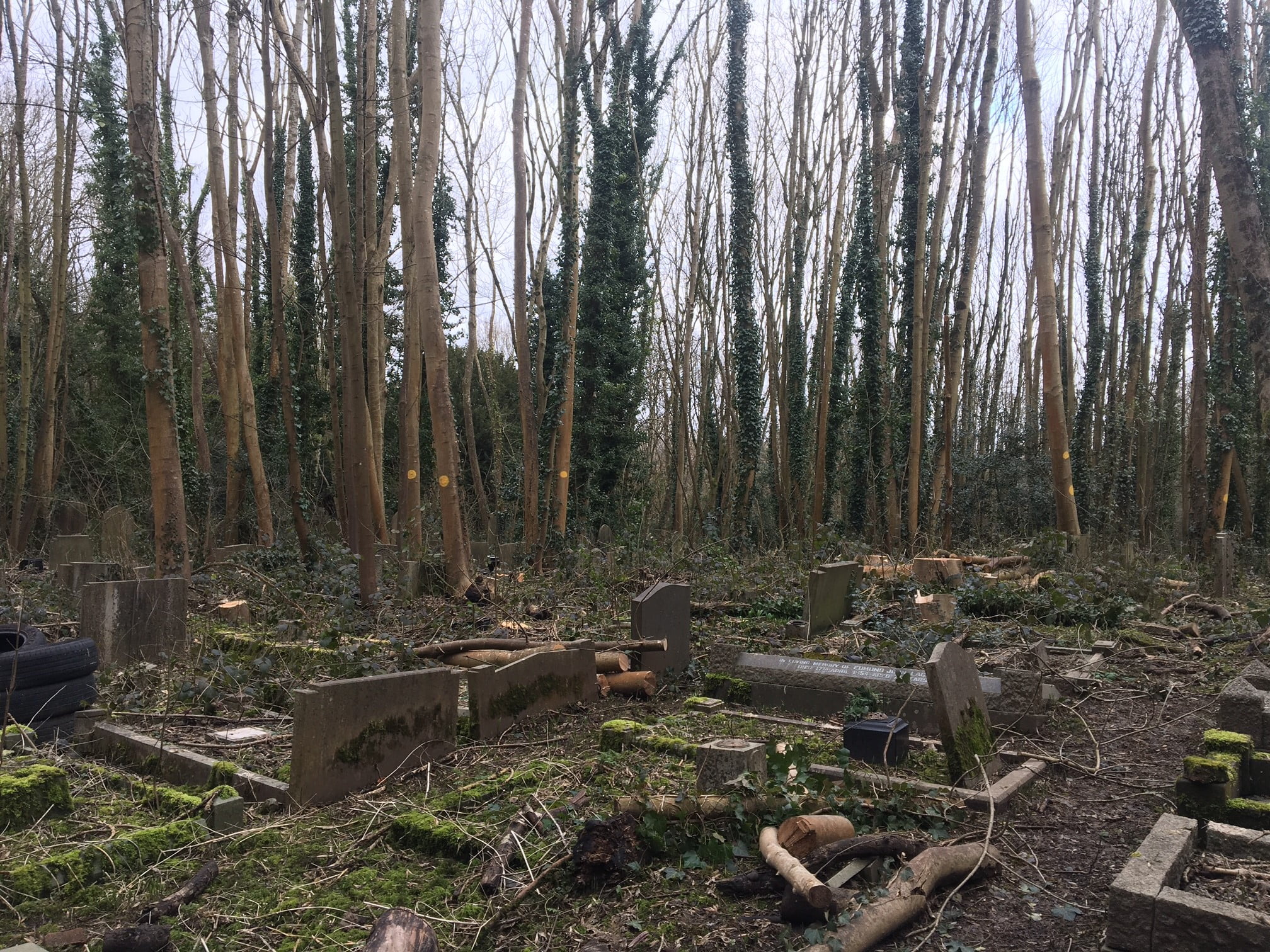
Self-seed trees growing around graves

Cross-section of diseased ash
Can you stop the spread of ash dieback?
No. There is currently no way to stop ash dieback spreading.
The disease is now established across the UK. Management focuses on safety and long-term woodland health, rather than prevention.
At Arnos Vale, our work is about:
- Monitoring tree health
- Removing dangerous trees
- Managing the woodland responsibly
We are grateful for the support of our dedicated volunteers, who help us to manage the workload through processing felled wood and maintaining areas of the site where trees have bene felled.
What about the wildlife that live in the trees?
Before any work begins, trees are checked for nesting birds and other species. Work is carefully timed to avoid disturbance where possible.
Dead wood is also retained in some areas. This supports insects, fungi, and other wildlife.
How are you paying for this work?
Managing ash dieback is expensive. Tree inspections, specialist contractors, and safe removal all require funding.
The annual programme of ash-felling at Arnos Vale is costing, on average, £25k every year. It is anticipated that this programme to removed diseased ash will continue until 2030.
We have previously received grant funding from the Heritage Lottery Fund to support this work. However, most of the ongoing costs are covered by our own income.
We fund this work through cafe sales, gift shop purchases, venue hire and sales of firewood and wood products.
This helps reduce waste and generate income to support our work.
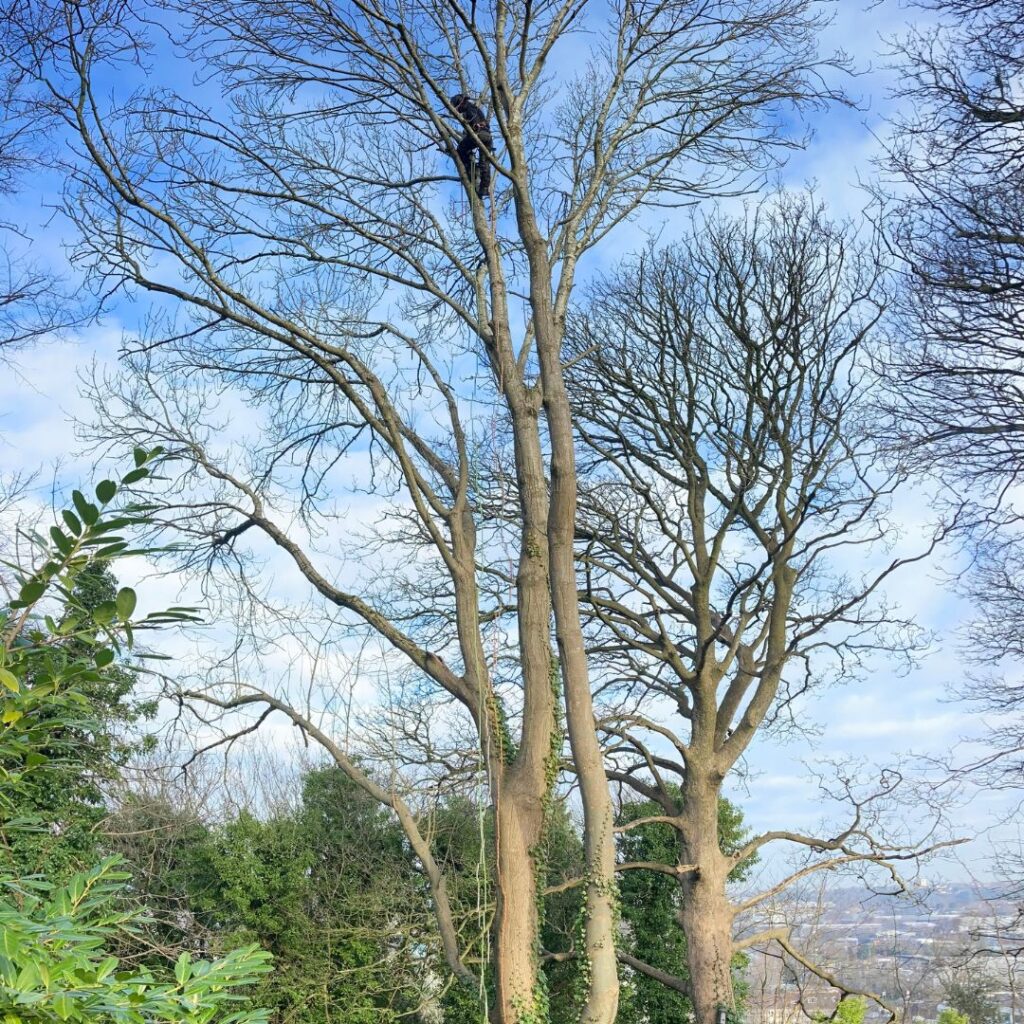
Tree cutter in upper branches of diseased ash tree

Blackbird in the woodland
Are you replanting trees in place of the felled ash?
No, we are not replanting directly in place of felled ash trees.
Instead of replanting like-for-like, we are allowing the space to regenerate more naturally and diversify over time.
As the woodland is thinned out, more light will reach the woodland floor. This supports ground flora, insects, birds and other wildlife.
Over time, this will help create a more diverse and resilient woodland. It will also open up access to areas of graves that have previously been difficult to access.
What happens to the wood that is cut down?
We make full use of the timber where possible:
- Some wood is left on site to support habitats
- Some is sold as firewood
- Some is crafted into items sold in our shop
This helps reduce waste and generate income to support our work.
What about the wildlife that live in the trees?
Before any work begins, trees are checked for nesting birds and other species. Work is carefully timed to avoid disturbance where possible.
Dead wood is also retained in some areas. This supports insects, fungi, and other wildlife.

Felled logs
Frequently asked questions
Why not remove all ash trees at once?
Doing this would dramatically and immediately change the landscape and would have detrimental effects on wildlife and other plants. Trees operate in 100’s of years, so even an extraction plan over 10 years is a quickly changing habitat for them.
Will you be doing tree work during bird nesting season?
Bird nesting season is between February and August. The majority of our tree work on site will intentionally fall outside of this period and takes place over the earlier winter months.
However, due to the scale and nature of the ash dieback infection we may sometimes need to perform necessary tree work during this season to ensure we maintain a safe site for our visitors to enjoy.
During bird nesting season we have put in place several procedures to ensure that we do not disturb nesting birds and comply with the Wildlife and Countryside Act 1981.
Can I take the felled wood that I see on site?
Everything within the site, including fallen branches and logs is the property of Arnos Vale Cemetery. This means removing anything without consent is considered theft. Some logs and branches may look abandoned, but they provide a valuable service to the ecosystem. Something we are passionate about supporting. You can find out more about deadwood habitats from the Woodland Trust.
Is it safe to visit Arnos Vale?
Yes. We carry out regular inspections and manage tree safety carefully. Trees are felled before they reach the point of being at risk of collapse. On occasion, if we identify a tree is suddenly at risk of falling, we cordon off pathways and apply to the Council for emergency consent to fell the at-risk tree.
What are the piles of tyres for?
We use stacks of tyres to protect monuments and graves from the impact of falling branches in areas of tree felling. They have not been fly-tipped or abandoned and will be removed after tree felling has been safely completed.
Page Last Reviewed: July 2026
Supporting our woodland habitats
Ash dieback is changing the cemetery landscape and threatening one of our most iconic native tree species. Your donation helps us continue vital conservation work to protect the health of our woodland.
