

Frederick Ashmead
November 12, 2026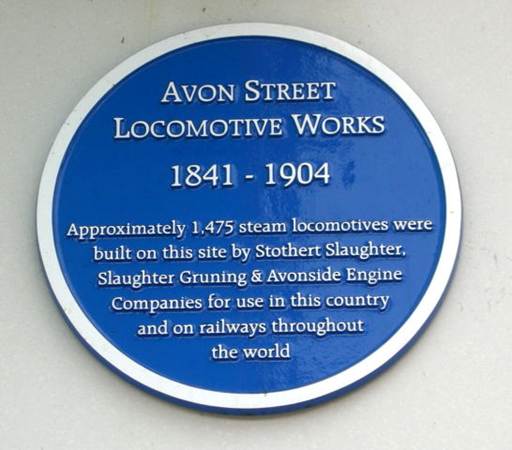
Early Life and Education
Edward Slaughter was born in London on 1 December 1814. He was educated at Dr Nicholas’s school in Ealing and in Paris before completing a five-year pupillage with John Seaward at the Canal Ironworks in Limehouse, London. Following his training, he spent two years travelling before entering the rapidly expanding railway industry.
Association with Isambard Kingdom Brunel
In 1837, Slaughter joined Isambard Kingdom Brunel as an assistant engineer. He contributed directly to constructing the London end of the Great Western Railway (GWR), overseeing permanent way laying, station building, and general construction work. Brunel subsequently appointed him to a post at the Bristol end of the line.
Slaughter and Brunel maintained a close, lifelong professional relationship rooted in mutual respect. Brunel’s high regard for Slaughter’s engineering had a direct commercial impact. Brunel wrote to the Directors of the Maria Antonia Railway in Italy to recommend Slaughter’s locomotives, later acting as a middleman to negotiate a favourable price for his former colleague. Their collaboration also extended to maritime projects; in 1843, the SS Avon—a screw-steamer designed by Slaughter and built by his firm—towed Brunel’s SS Great Britain out of its dry dock.
Locomotive Manufacturing and Marine Engineering in Bristol
 In December 1839, Slaughter accepted an offer from Henry Stothert and Co. in Bristol to join the engineering works as managing partner, focusing specifically on locomotive manufacturing. During his tenure, Slaughter travelled widely abroad to study foreign railway networks. His works supplied nearly one thousand locomotives, alongside marine engines, stationary engines, and iron steamships. Because many of his export engines operated on overseas railways featuring steep gradients and sharp curves, Slaughter took a leading role in introducing and developing articulated and bogie systems suited to challenging terrains. Today, a blue plaque marks the site of his former locomotive works in Bristol, which is now occupied by a hotel.
Personal Life
Slaughter married Mary Ann Hensley in 1840. Following her passing, he married Elizabeth Alicia Brock in August 1866. Together, they had six children: Edward, Osmond, Alice, Catherine, Mary, and Clara.
Legacy and Death
Slaughter became a member of both the Institution of Civil Engineers and the Institution of Mechanical Engineers in 1853. Historical archives, including the Science Museum Group Collection, preserve his professional correspondence with prominent contemporaries such as G.P. Bidder and records of his engine specifications for international projects in places like Lahore.
He remained an influential figure in Bristol public life until his death on 13 May 1891, at the age of seventy-six. Following his passing, tributes from the engineering community highlighted both his technical brilliance and his personal integrity:
- Institution of Mechanical Engineers. Highlighted his pioneering work adapting locomotives for foreign railway conditions, his development of bogie arrangements, and his innovative locomotive-powered screw-steamers.
- Institution of Civil Engineers. Remembered him as "a man of considerable character and parts" whose reputation in locomotive construction was "of the highest class," adding that he was "an excellent judge of work, and was ruled by the strictest sense of honour in all engagements he undertook."
